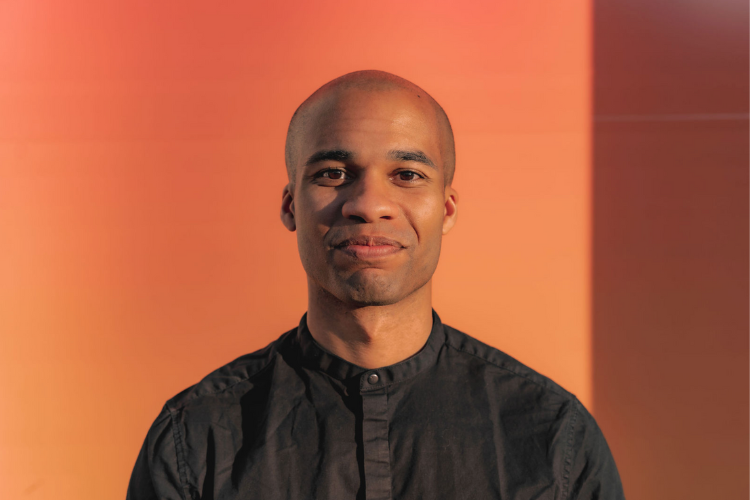
After graduating from Stanford with a deep interest in poetry, Tucker Bryant worked at Google as a product marketing manager, where he built go-to-market strategies for some of the company’s major products. He helped launch and position tools for businesses, contributed to cross-functional leadership, and drove innovation initiatives. These skills now inform his insights on creativity, communication and leadership in business.
With this experience, Bryant came to realize that the creative practices that he once thought he had to set aside in the office were the very tools that helped him thrive in Silicon Valley. Today he bridges the gap between creativity and corporate strategy, helping leaders embrace discomfort, challenge assumptions and unlock bold, transformative ideas.

Who: Tucker Bryant, Poet & Innovation Expert
What: Opening Keynote: “Turn the Page: Innovative Thinking for Better Results”
When: Monday, March 1
Where: Orlando World Center Marriott
Learn more and register at NBOAAnnualMeeting.org.
Net Assets: I have heard of poets who work a corporate job, but their work and poetry seem separated. You bring your poetic lens to the business world, which, to be frank, sounds weird. How do you do that?
TUCKER BRYANT: I love the candor. It does seem weird, and it is weird. But it’s also so much more organic than I think we tend to assume, based on our presumptions about what it means to be a creative and what it means to be a businessperson.
Prior to working at Google, in college, a lot of my focus was on poetry. I wasn’t thinking deeply about what came next because I was deeply in love with the art. Then I went into the corporate world, and I had this belief that I needed to shove my sonnets on the shelf because they weren’t relevant. But as I proceeded through my work at Google in product marketing, I realized there were these conversations that my business work and poetry wanted to have, that I was preventing them from having.
To be more grounded, I would say the left brain and right brain divide is not the way we actually live. Professionals greatly benefit by having an openness to a creative side, in the same way creatives are benefited by an operational mindset.
So at Google, we needed an openness and curiosity to ask if the goals we set ourselves a month ago still made sense. And then as a poet, I had to be open to inspiration and connect with my feelings, but I also needed a structure. A poet without any structure will not have the rigor to turn ideas into a polished piece of work.
I encourage business leaders to be open to generating new ideas, to think beyond the page that’s right in front of us, to consider 100 different directions, like a poet. And then you decide, analyze, revise in a way that’s almost scientific to maximize the impact.
Net Assets: So you help people generate ideas then home in on which ones need structure or more time and how to move from generation to action — is that right?
BRYANT: I have found that most folks that I encounter in the professional world have a lot more trouble with the generating-ideas side. We’re so used to behaving in this very… I don’t want to call it necessarily perfectionistic, since that’s not everyone’s experience, but in this very intentional way where we think that the final product we’re going to put out needs to be great and thoughtful in order to have a strong impact on the people we’re trying to serve. It makes sense when you’re dealing with future generations.
It’s getting out of your own way enough to be open to the wealth of ideas that you might have at that really early, nascent, fragile stage.
We start suppressing ideas that might not be fully baked or might not be at that level of refinement, even when some of those ideas are the ones we need to give the opportunity to be nurtured, to turn into something that can drive that impact we’re looking for. It’s getting out of your own way enough to be open to the wealth of ideas that you might have at that really early, nascent, fragile stage.
Net Assets: Can you give us an example of how that actually happens?
BRYANT: The practice here is like falling in love with your worst ideas. We all know the phrase writer’s block, right? We think it’s when a poet or a writer just can’t get their ideas onto the page or they don’t have any ideas. But it’s actually not that the artist doesn’t have any ideas. It’s that they get so attached to that end state we talked about that they don’t recognize the ideas they had as ideas. They’re like, “That’s so bad. It doesn’t even count as an idea.”
So part of the work of this unblocking is getting folks to go in the opposite direction. I say “aim for the trash can,” by which I mean give yourself permission and in fact make contact with what you feel like your worst ideas are. A high volume of output gives you opportunities to improve on what you’ve started. It is way more effective than waiting for the proverbial bolt of inspiration.
So a lot of the work that we’ll be talking about is how to fall in love with your worst ideas and get into that rhythm of changing your frame of mind as to what sorts of ideas belong on the page so that we have more to improve upon.
Net Assets: In a recent blog post, you argue against best practices. At NBOA, we pride ourselves as being a conduit for sharing best practices and also helping people not reinvent the wheel. Can you explain why you caution against a best practices mindset?
Make new connections among the hundreds of independent school leaders and service providers at the 2026 NBOA Annual Meeting & Business Solutions Showcase.
BRYANT: It’s the idea that tried-and-true wisdom may not always be the best thing for us. Of course, best practices have immense value. Nine times out of 10 they help us out. But we can get into a state of overlooking moments when they don’t apply because they have a way of directing our behavior.
What I see is people end up denying their actual experience because this abstract “best practice” tells them that what they should be experiencing is different from what they are experiencing.
I have a personal example, with procrastination. We’ve all been told, “Don’t procrastinate.” But procrastination actually helps me be more decisive, and it helps me in the lead up time to that decision do other things as opposed to spinning my wheels for many days and hours.
So I’m not saying throw all the best practices out. Rather recognize there will be gaps between conventional wisdom and the experiences we have, and the theories we may want to test may fall outside of what we’ve built, as institutions and individuals. It’s the willingness to say, I have a feeling that a different approach may be better, even if best practice seems to be telling me something different.
Net Assets: Do you think generative AI has the potential to help business professionals think more creatively?
BRYANT: I think in its best formats, generative AI can be an incredible thought partner that can generate 10 times the number of ideas that we can generate on any given day and give us, say, 20 things to potentially explore. It’s an amazing development, but we shouldn’t overlook the risk of shortcutting. It is so simple to say, “Give me an idea. What’s next?” and remove ourselves from the creative process.
Poetry is relevant in that it’s wrestling with a blank page from the moment you start writing. It’s creative struggle, having to parse and deal with the friction of getting from zero words to one line — of assessing if this line is conveying the emotion I want it to or if I need to tweak it. In this way, the artist improves as a person and finds their voice.
With gen AI as a thought partner, the only way we can distinguish what we’re doing is to make sure we’re actively, not passively, engaging, so we don’t atrophy what is deeply human in us and enables us to reach our potential.
With these new tools, there’s a threat to race to the bottom to produce ideas the most quickly, even if they’re not distinct. We need to train ourselves to recognize what ideas are in line with our strategy and where we want to tweak them. With gen AI as a thought partner, the only way we can distinguish what we’re doing is to make sure we’re actively, not passively, engaging, so we don’t atrophy what is deeply human in us and enables us to reach our potential.
I’ll give you an example of a positive use of generative AI in this sense, from when I was working with people in the food service world. They were having trouble thinking through ways they could change the offerings they provide customers, and they used an LLM [large language model] to push them to think about absurd, really different ideas for menu options, and then they went through those ideas and identified what was interesting to them. So using that tool, they found a seed of an idea they could grow.
Net Assets: What’s one more thing our audience can look forward to in your talk at the 2026 NBOA Annual Meeting?
BRYANT: The talk will be interactive and experiential. I’ll be merging business insight with storytelling and live demos that will bring a lot of these ideas to life, with the idea to get folks thinking and acting immediately. Our ability to apply this thinking to operations starts the way we as people are positioned in the world. Everything starts from considering how these concepts apply in our own lives.