
Long before entering independent schools, I worked in my family’s restaurant. On any given night, I might greet customers at the door, manage reservations, wait tables, work the line in the kitchen or take out the trash. Like many family businesses, there wasn’t room for strict job descriptions — if something needed to be done, you simply did it.
Years later, I read “Unreasonable Hospitality: The Remarkable Power of Giving People More Than They Expect” by Will Guidara, who explains that when people see themselves as responsible for the entire customer experience — not just their assigned tasks — something special happens. This is the same connection I see between my family’s business and the healthiest independent schools.
Hospitality is not a transaction; it is an opportunity to build relationships. It requires seeing and knowing people, anticipating needs, creating moments of connection and stepping in when something is needed, even when it falls outside your formal responsibilities. The strongest school communities operate in this way, with individuals willingly stepping beyond the boundaries of their job descriptions in service of something larger than themselves.
How Coaching Helped Change Management
At Berwick Academy, the concept of “unreasonable hospitality” is most clearly reflected in what we call the “teacher-coach model,” similar to what some boarding schools describe as the classic “triple threat.” Simply put, teachers are encouraged to build relationships with students through a wide range of co-curricular experiences, including athletics, advising, clubs, performing arts, student travel and residential life. While these models certainly provide practical and economic efficiencies, they also create the foundation of a true school community, where students are seen, known and valued.
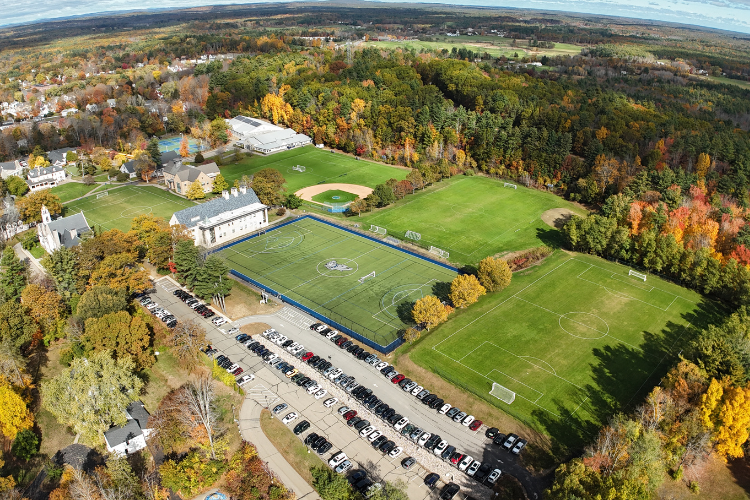
This philosophy is just as relevant for administrators as it is for teachers. Some of the most meaningful growth in my career has come from saying yes to opportunities beyond my original job description. Looking back, those “other duties as assigned” shaped not only my professional path, but also my understanding of what creates an authentic school community.
I arrived at Berwick Academy more than a decade ago as the school’s first director of cultural competency. Over the first several days, I met with Berwick employees, students and parents — an experience I’ve often described as both a gauntlet and several first dates, as everyone assessed trust and chemistry. In one such conversation, I casually mentioned that I had rowed in college for four years, and later that day, the director of athletics asked whether I would be interested in helping with the school’s rowing program. I agreed.
At the time, I viewed coaching as an extra commitment. What I did not realize was how profoundly it would shape my experience at Berwick. As a coach, students came to know me differently than they did in my role as an administrator. Parents saw me in a different context as well. We spent long afternoons on the water, early mornings loading trailers, weekends traveling to regattas, and countless hours in pursuit of a common goal. Relationships and trust developed naturally.
At the same time, I was the first DEI practitioner at the rural Maine school, and I was launching a set of new initiatives. While I initially thought coaching was unrelated to my administrative job, it gave me an opportunity to build relationships that in turn helped me better launch new programs and protocols.

An Expanded Role
Over the years, coaching rowing in the spring evolved into additional coaching responsibilities like coaching cross country in the fall. Administrative work led to teaching and advising. Teaching led to student travel and residential life oversight. Student support led to faculty and staff support. And all of this work led to strategic planning, as well as opportunities to engage more deeply with governance and board work.
Over time, my role evolved from director of cultural competency to assistant head of school for people and culture. Each new responsibility provided another way to understand the school community; each role brought me closer to another part of the community.
Today, as an assistant head of school, I often think about the teacher-coach model and what it teaches us about community. The lesson is simple: the more places we show up, the more people we come to know. The more people we come to know, the better we are able to be in community with them. The more we are in community, the better experience we have, both in giving to the community and receiving from it.
Looking back, the most important lesson from my family’s restaurant was never about learning multiple jobs. It was about understanding that every role contributes to the experience of the people we serve. While my titles have changed and responsibilities have grown, that lesson has remained constant throughout my career in independent schools.
Whether at a restaurant, coach’s launch, classroom, dormitory or administrative office, the goal has always been the same: helping people feel seen, valued and supported.
The responsibilities that shaped me most were never part of the original job description. They began with a simple question: “Would you be willing to help with this?”
More often than not, the answer was yes.