NBOA President and CEO
I hope this July you’re finding some time for bigger picture thinking, even if the audit is underway or a facilities project is picking up pace. Like most of our member schools, NBOA’s fiscal year ends June 30 and starts anew July 1. Around this time of year, staff pause to reflect on what was accomplished and what we learned from the past year, but most importantly, focus on the year ahead — in person. As a fully telework staff that connects face to face just three times a year, our summer retreat means a lot.
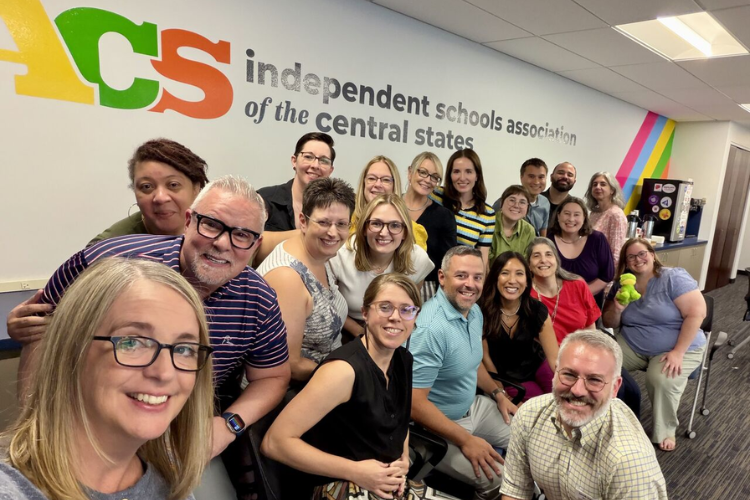
This year we gathered in the glorious city of Chicago, generously hosted by the Independent Schools Association of the Central States (ISACS), whose offices and professional development classroom on Wacker Drive were recently renovated. I can attest, it’s a beautiful space, and we thank ISACS sincerely for sharing it with us. In addition to updates on strategic initiatives and year-end performance in finance, programs, resources and membership, we absorbed professional development in association management and generational diversity.
 |
|
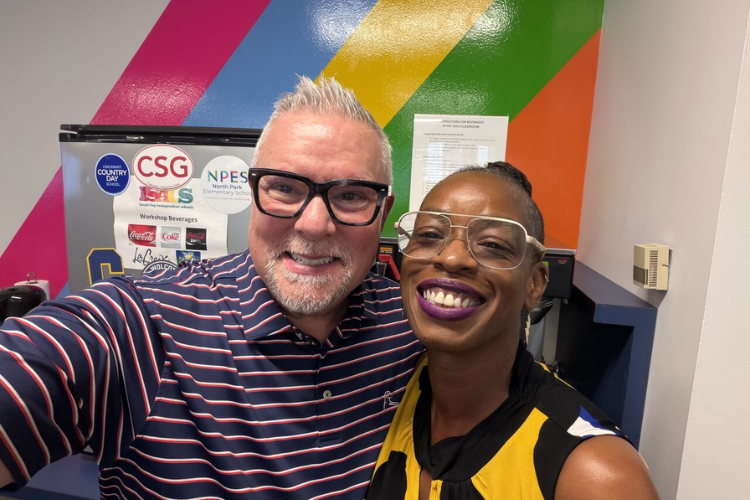
Left: The NBOA staff at the ISACS Classroom & Offices. Right: Shields with Artesha Moore of Association Forum.
Artesha Moore, FASAE, CAE, president and CEO of the Chicago-based Association Forum, urged us neither to fear AI nor wholly trust it but instead to carefully manage it. “Speed without wisdom is chaos, and wisdom without tools is not enough,” she said. As a technologist turned executive, she holds a strong interest in AI and also a broad understanding of how individuals hold widely divergent attitudes toward it. Moore drew on the Coen brothers’ movie “True Grit” and its central character Mattie to inspire us with wisdom to guide us on the uncertain path ahead. That includes the following:
- Knowing what matters.
- Asking for help when you need it.
- Learning as you go.
- Facing what you don’t see coming.
- Telling the truth.
- Stop doing what’s no longer working.
- Building trust across generations.
That last point leads directly into our second guest speaker, Megan Gerhardt, Ph.D., a business professor at Miami University who hosted an NBOA webinar on generational diversity as part of NBOA’s Silver Anniversary series in 2023. Working not too far away in Cincinnati, she traveled to “the windy city” for a session on how to make generational differences an asset of our workplace rather than a source of conflict.
As a former independent school parent (her son is now in college) and trustee, NBOA’s membership is near and dear to Gerhardt’s heart. She also pointed out that while most workplaces today include four generations, schools are especially rich places for intergenerational interaction, as they include at least five and sometimes six generations, and employees have opportunities to see how the youngest generation – the students they serve – is taking shape.
Gerhardt is known for her book “ Gentelligence” as well as a viral article on Gen Z texting habits. She teased her next book with us, which draws on the metaphor of a house divided. It aims to help organizations understand what are the “load bearing walls” that everyone must support and what walls can be modified or taken down in an effort to serve new needs of multiple generations and better reach strategic goals. “How do we decide what voices get heard when making decisions?” she posited.
It’s unnecessary to reiterate the negative labels that each group is saddled with, but I do think the history she shared was eye-opening and can help us see and understand each other more clearly.
While Gerhardt urged us never to put colleagues into generational boxes or rely on stereotypes, she shared some societal shifts that impact people of different ages.
- Baby Boomers, coming of age midcentury, were tasked with remaking society post World War II. Their children, who make up the Millennial generation, were one aspect of that transformation, which included structured childcare, test preparation and competitive extracurriculars.
- Meanwhile Gen X, sandwiched between these generations, had more autonomy coming of age than any other generation, making them more likely to buck Baby Boomer’s expectations that work be the central pillar of identity.
- The youngest workplace generation today, Gen Z, has been raised with more surveillance, performance monitoring and educational accommodations than any other age.
It’s unnecessary to reiterate the negative labels that each group is saddled with, but I do think the history she shared was eye-opening and can help us see and understand each other more clearly.
I want to leave you with some questions Gerhardt provided to help my staff colleagues better understand their differences. Rather than jumping to judge workplace behavior that is unfamiliar or apparently disrespectful, Gerhardt urges us to ask, Why?
- To identify assumptions, we can ask, "Can you explain why you think that?"
- To adjust our lens, we can ask, "Can I share my perspective on this?"
- To strengthen trust, we can ask, "Are there any challenges you’re facing that you’d like to discuss?"
- To expand the pie, or “bake a bigger cake,” as Gerhardt quipped, we can ask, "How can we combine our thoughts to come up with a unique solution?"
Gerhardt provided many more sample questions, and there is much more to her work, which you can read more about on her website, and learn more about in the NBOA Silver Series webinar — before her new book is published.
|  |
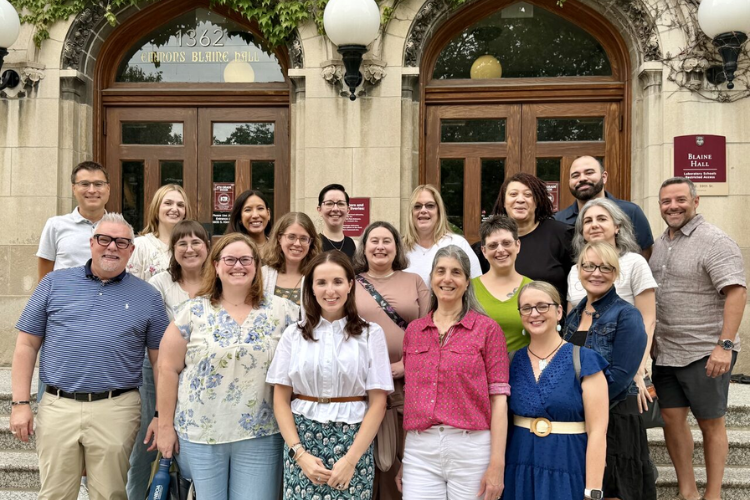
The NBOA staff at University of Chicago Laboratory Schools.
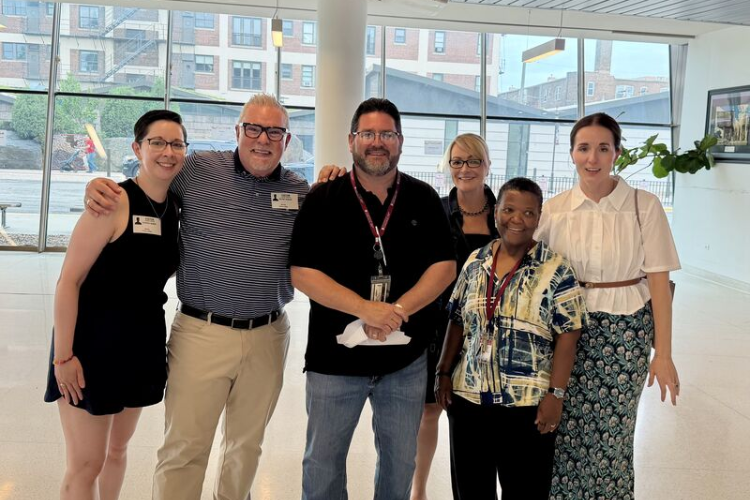
I would be remiss not to thank the incredible University of Chicago Laboratory Schools, which hosted us on our last day in the city for a facilities tour and Q&A about their unusual operating structure in relationship with the university. It was a valuable opportunity to see a member school close-up and in action — as you can guess, summer camp was in full swing — and even more to talk with the talented professionals who run operations, including Marsha East, associate director of schools, finance & operations; Joseph Wachowski, director, operations; and Carla Ellis, associate director of schools.
I hope this post left you with some food for thought, and more importantly that you have time and mental space to generate your own reflections, for yourself, your team and your school, as you look back at last school year and ahead to the next. And NBOA will be your professional partner every step of the way!