NBOA President and CEO
Today, I’m excited to share a new twist for my CEO Notebook blogs. The first blog each month will be a classic leadership reflection based on a top-of-mind insight or an important update from NBOA. The second will showcase conversations with one of my guests from the Net Assets Podcast, which I have had the pleasure of hosting for nearly two years already recently reaching the milestone of 10,000 downloads!
I hope this new format will provide a more immediate connection between you, our readers, and the NBOA community, through the sharing of these one-one-one conversations about top issues in the profession with the leaders who possess great insight into them. If you are intrigued by what you see here, you can listen to the episode, on the NBOA website or anywhere you get your podcasts.
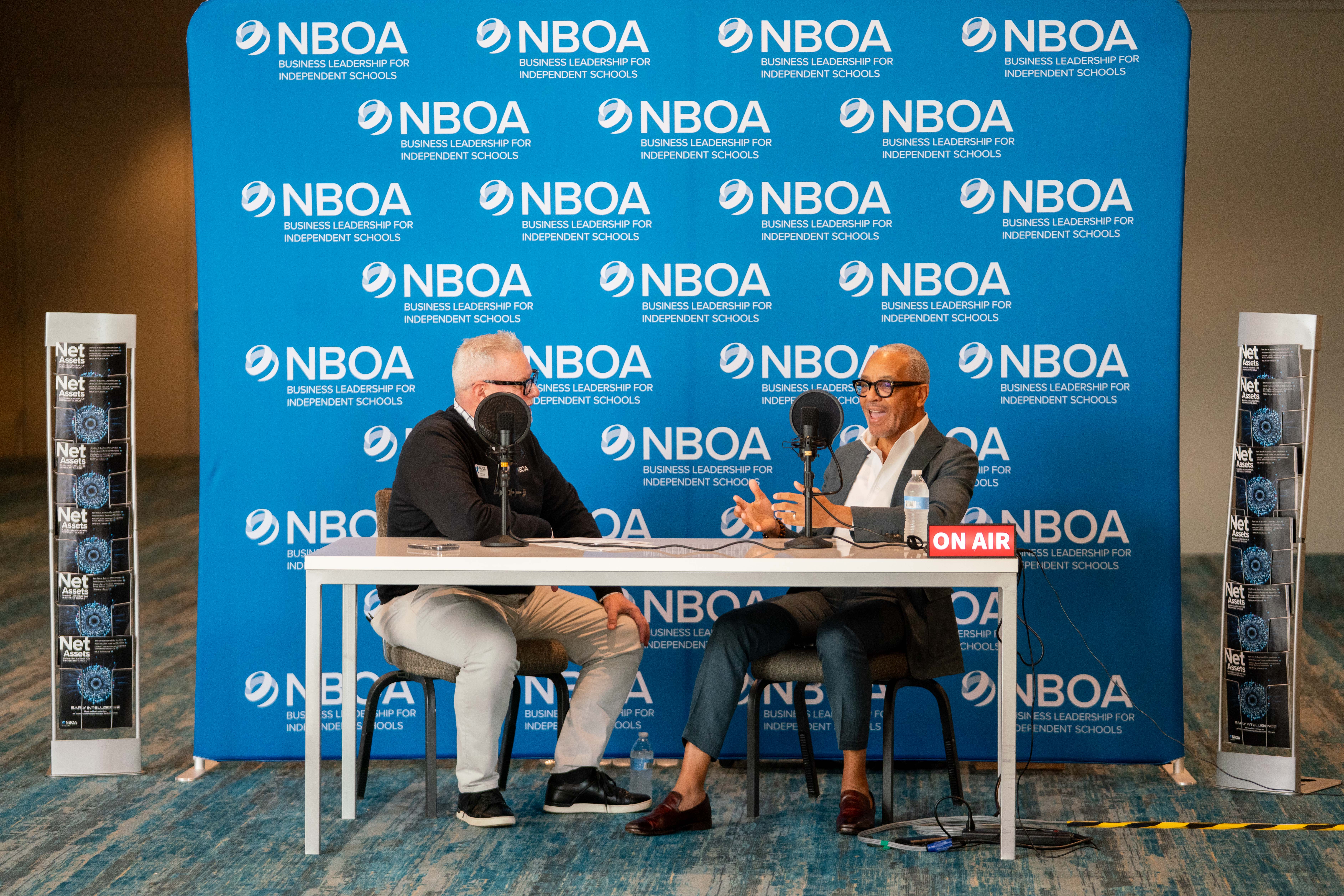
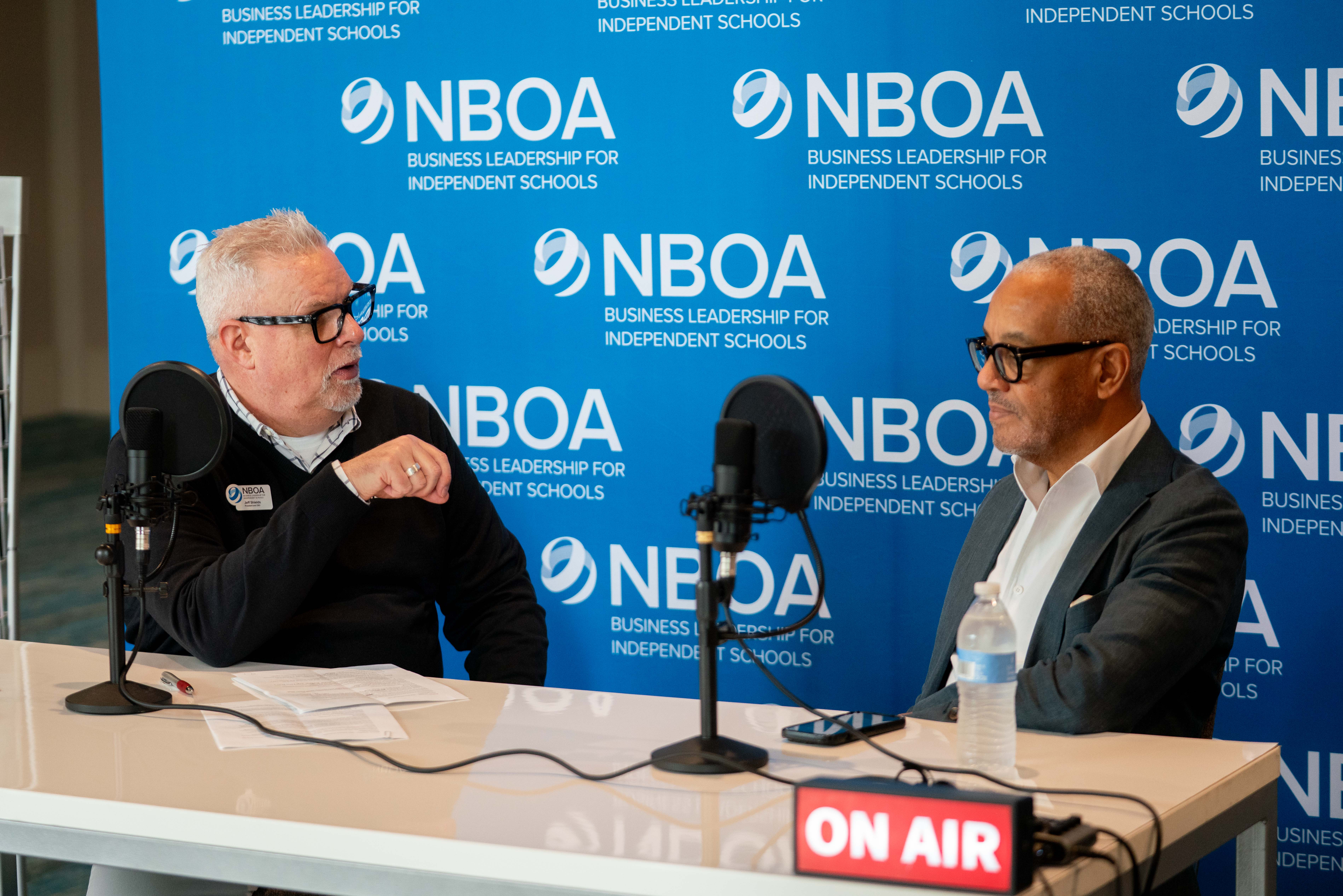
Here’s a piece of my conversation with Dallas Joseph, CFO at Baylor School in Chattanooga, Tennessee. This episode was recorded live at the 2026 NBOA Annual Meeting in Orlando.
Jeff Shields: Dallas has served Baylor for more than 25 years and is one of the most respected leaders in independent school business operations. In 2019, Dallas was recognized with the Ken White Distinguished Business Officer Award, the highest honor presented by NBOA. He served on the NBOA Board of Directors, as board chair from 2011 to 2013, and currently serves as an advisor to NBOA Advisory Services, as well as a mentor for the NBOA Leadership Academy.
We’ve talked about your early days in the association and the value it brought to you. So many of those things are still true today: the connections, the importance of community. But when you think about that time, what changes since then stand out the most?
Dallas Joseph: I think the association mimics the evolution of the profession. The NBOA that I first got introduced to, it was tactical. It was an organization that was more about networking, getting business managers together, setting up ways for us to share information and disseminating tactical information.
Today, it’s all about strategic initiatives. And the responsibilities of the role of the CFO today are so much greater and so much more risk involved than they used to be. We’ve gone from being a voice to the voice in independent school business.
Shields: You came from higher education, serving as a CFO at different colleges before joining the independent school world. How would you describe the difference in those roles?
Joseph: Here’s a good example. In higher ed, I was not on the financial aid committee. In the independent school world, as a CFO, if you desire, you could be on that committee. I wanted to be on the financial aid committee. The difference that you make by helping families who otherwise wouldn’t be able to afford an education for their kids — it’s unbelievable.
Let’s say you help a family at the sixth-grade level afford the education. I’ve been at Baylor long enough now for the students that I helped in the early 2000s to be 25, 26, 27 years old. They’re coming back and talking about how I helped them and their family afford a Baylor education that helped them get to their dreams. That’s huge.
Shields: And it's so interesting to me because you have a lot of tenure. You're so well respected, but being on that financial aid committee has always been important to you. Is that your advice to other CFOs — to be part of that process?
Joseph: Well, that’s the mission of the institution, to help kids make a positive difference in the world. You have the ability to have a lifelong impact on a child and their family. That’s just one difference between higher ed and independent schools.
In an independent school, every colleague that you work with, you get to establish friendships and relationships that help you provide the resources and support that staff or students need to be successful.
Shields: You have 25+ years at Baylor School. That tenure is going to be harder to find in business leaders, especially CFOs and COOs, as the years come ahead of us. But what's your secret to longevity at Baylor?
When you have a good team behind you, they continue to push you to learn new things and to go places that maybe you didn’t think you could go. And so you keep raising the ceiling.
Joseph: The team that I’ve worked with. It’s important for us as leaders to recognize that we have to prepare for when we move on. You do that by hiring a great team that you can give opportunities to take on initiatives so that you don’t have to do all the work. When you have a good team behind you, they continue to push you to learn new things and to go places that maybe you didn’t think you could go. And so you keep raising the ceiling.
I've reached that point in my career where, in some ways, I'm second guessing whether or not a 26- or 27-year career is good at one place.
Shields: What do you mean by that?
Joseph: It’s a heavy burden when you are the holder of all of the information. Everybody wants a piece of you. You're in every conversation. Every meeting. Or they check-in with you after. And your time becomes the institution's time. You're fighting for that strategic time that you used to have.
Shields: I’ve been at NBOA 16 years today, Dallas. Do you remember that? That kid that talked a lot and had a lot of big ideas and a lot of energy? I often say to myself, why would I go to a different organization and deal with what I don't know? I'd rather stay at this organization, which I love and with the members that I love.
Now I want to talk about a sensitive but important topic. Throughout your career, you've broken boundaries in independent education. You were the first person of color to serve as CFO at Baylor, to chair the NBOA board, to receive the Ken White Distinguished Business Officer Award. You’ve been a trailblazer in the profession. What has that meant to you personally?
Dallas Joseph: Growing up in the 1960s, my grandfather and my dad both owned their own businesses. I watched how they had to navigate. It taught me a lot about perseverance and always being prepared.
When the door opens, your job is to be prepared and to be thinking about the impact that you will have so someone else can walk through that same door.
When I went off to find my own journey, I always thought that when I show up, I want all the skills that are required for me to take advantage of the opportunities that came my way. When the door opens, your job is to be prepared and to be thinking about the impact that you will have so someone else can walk through that same door.
My first position in that role was a little scary. I was more concerned about failing than what I should've been thinking about, which was: What do I need to do to get this college five years down the road? But after that first year, when I got comfortable and I knew I was making a difference, it was a no-brainer that this is right for me, I'm being successful, and that others behind me will have an opportunity because I'm stepping through this door.
Listen to the full episode or explore other episodes of the Net Assets Podcast.

Jeffrey Shields, FASAE, CAE
NBOA President and CEO
Follow NBOA President and CEO Jeff Shields on LinkedIn.