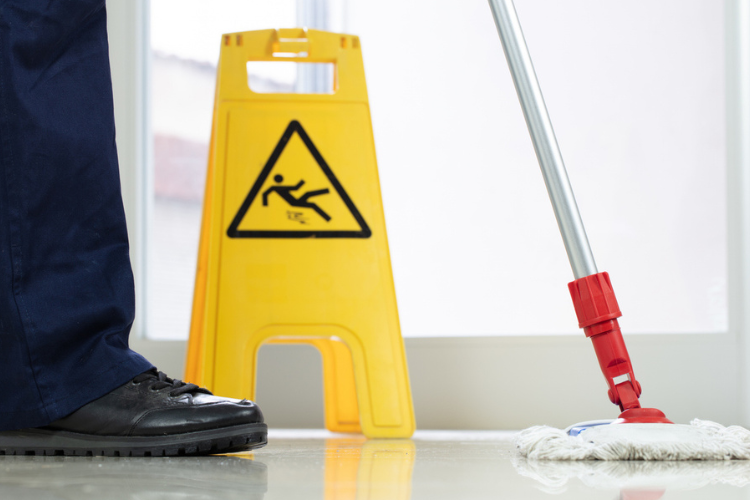
A visitor trips over a rough bleacher edge at a volleyball game. A student slips on wet leaves. A parent falls on an uneven sidewalk outside a school building.
Each incident may seem routine, but for independent schools in today’s liability climate, everyday slips, trips and falls can easily escalate to prolonged, acrimonious and costly disputes.
School business leaders do not need to manage every detail personally, but they can make sure the right systems are in place before an incident becomes a larger problem. That starts with clear processes for prevention, reporting and documentation.
Claims Can Be Costly
The figures on claim severity paint a clear picture of the broader liability environment, where litigation-related costs are rising faster than general inflation.
Even a seemingly minor incident can pull in staff across departments, generate follow-up work for facilities, HR and leadership, and put added pressure on already tight budgets. Of United Educators’ independent school claims from 2018 to 2023, more than half of slips, trips and falls claims went into litigation.
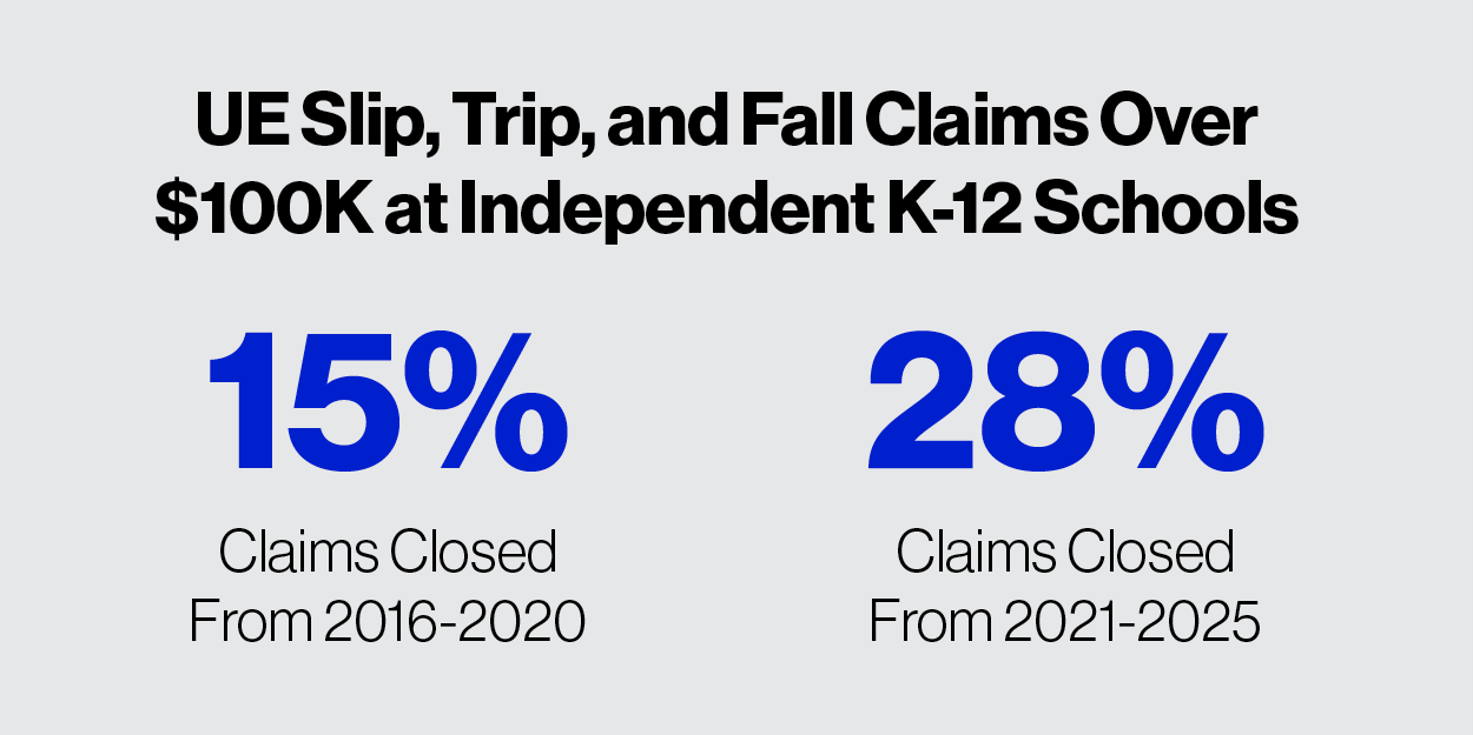
UE member claims data from independent K-12 schools from 2021 to 2025 show that more than a quarter (28%) of slip, trip and fall claims were for more than $100,000, compared with 15% of such claims closed from 2016 to 2020.
For independent school leaders, the takeaway is simple: The best time to reduce disruption and cost is before a small incident becomes a hard-to-resolve claim.
Why Small Incidents Escalate
Slips and falls are common on active campuses. Weather, crowds, maintenance issues, and construction can create hazards across classrooms, gyms, parking lots, sidewalks and playgrounds.
Our claims data shows that these matters often become harder to resolve when schools:
- Lack strong documentation of inspections, incidents and mitigation.
- Delay repairs.
- Inconsistently track reported hazards.
- Have unclear vendor and contractor agreements.
Documentation matters. When accident records are incomplete or missing, it can be harder for a school to show what happened and respond effectively to a claim. Those missing records can present obstacles later, when memories have faded and the site has changed.
A rough edge may have been repaired. A wet floor may have dried. Without photos, measurements, witness statements or timely records, including documentation of actions taken to warn people about hazards, such as blocking access to an area or placing prominent signs, the school may struggle to reconstruct facts.
First, Create a Simple Reporting System
Every school needs a standard incident reporting process that captures the basics of an incident consistently and quickly. The goal is not to create more paperwork but rather ensure your school has a clear record of what happened before details are lost and follow-up becomes more time-consuming.
.png?sfvrsn=49f4e987_1 "inspection icon (1)")
Regular inspections are just as important as a maintenance reporting system. Create and follow a timetable for inspecting sidewalks, stairs and other walking areas. If your school cannot repair a hazard immediately, restrict access, post clear warnings or use barriers until the repair is complete.
Reports should be completed as soon as possible, especially when someone is injured by anyone responding to a slip, trip or fall, by the following:
- Event staff
- Security
- Facilities employees
- Teachers
- Coaches
- Administrators
Keep the process simple and consistent. At a minimum, the report should capture:
- Where and when the incident happened.
- Conditions at the time.
- Who was involved or witnessed it.
- What your school did in response.
Photos or video can help preserve key facts.
Next, Ensure Reports Reach the Right People
In some claims, someone at the school knew about a hazard before an injury occurred, but the information never reached the employees who could fix it or warn others.
What the school knew, and when it knew it, matters in a legal dispute. If the school did not act reasonably about a hazardous condition, the claim becomes harder to defend.
A central maintenance tracking system can help prevent communication breakdowns. Follow these steps:
- Log reports of defective conditions and repairs in one place.
- Assign responsibility for follow-up.
- Document the steps taken to warn people about known hazards.
- Document when each issue is fixed.
The system also can help your school identify repeated complaints or incidents in the same location.
What the school knew, and when it knew it, matters in a legal dispute. If the school did not act reasonably about a hazardous condition, the claim becomes harder to defend.
Clarify Responsibility Before There Is a Claim
Institutions sometimes own, lease or use spaces where maintenance responsibility is not clearly understood. These include:
- Sidewalks
- Parking lots
- Athletic facilities
- Leased spaces
- Event venues
In these spaces, who is responsible for inspections, repairs and hazard mitigation can be uncertain. Clarify ownership and maintenance responsibilities before an incident occurs.
Understand not only how risk is allocated in vendor contracts, but also who is responsible for maintaining and repairing the spaces where injuries may occur.
Many slips and falls involve spaces or work connected to third parties, including leased facilities, off-campus event venues, construction projects, snow removal and maintenance work. Understand not only how risk is allocated in vendor contracts, but also who is responsible for maintaining and repairing the spaces where injuries may occur.
When outside vendors perform work on school property, have legal counsel draft, review or approve written contracts. Contracts should include appropriate indemnification language and, whenever possible, certificates of insurance or endorsements naming your school as an additional insured on the contractor's policy.
Respond With Empathy
A strong response to a slip, trip or fall combines practical follow-up with clear, compassionate communication.
People injured on campus may be scared, embarrassed, frustrated or angry. Their experience after a fall can influence whether the matter escalates. The school should:
- Offer appropriate medical help.
- Document if the person declines treatment.
- Help with contacting family or friends when needed.
- Communicate clearly with parties and witnesses.
For students or employees, a fall may create temporary mobility, learning or work limitations. Be prepared to connect injured people with the appropriate accommodation process.
Showing care is not the same as admitting fault. It means treating the injured person with care, communicating clearly, and making sure your school’s next steps are timely and accurate.
Slips, trips and falls may never be the most attention-grabbing risk on campus. But when a seemingly minor incident sours meaningful community relationships and grows into a six-figure claim, your school’s records, systems and response can make a major difference.